



Building Regulations Specs with Wood-Fibre Insulation
Use of Wood-Fibre Insulation
Wood-Fibre Insulation products are intended to provide a more sustainable, natural and eco-friendly alternative.
Several manufacturers produce Wood-Fibre Insulation products, with properties that differ between manufacturers and individual materials.
Benefits of using of Wood-Fibre Insulation
This may vary between products and manufacturers but compared with 'Standard' Insulation Products, benefits can include:
- Environmentally sustainability. Sustainably-managed sourcing.
- Less/No harmful additives.
Type of Product
Wood-Fibre products are available in various formats including:
- Sarking/Sheathing Boards
- Interlocking boards
- Combined Sheathing-Render boards
- Rigid-Fibre boards
- Flexible Insulation Batts for use between studs/rafters/joists etc.
Thermal Conductivity/Performance
Typical Thermal Conductivity values for Wood-Fibre products might range from 0.048 W/(mK) for Sarking/Sheathing boards to 0.036 / 0.038 W/(mK) for Flexible Insulation Batts.
Wood-Fibre Batts for use between studs/rafters/joists generally have better thermal performance (0.036 - 0.038 W/[mK]) than the corresponding Wood-Fibre Sarking/Sheathing Boards.
Some manufacturers also provide Rigid Wood-Fibre Boards with good thermal performance (0.037) for use in Walls, Roofs and Floors.
In some cases, many standard non-wood-fibre insulation products tend to have better thermal performance, although it is likely that the additional thickness required for Wood-Fibre Insulation products is justified in terms of the environment for the benefits in sustainability.
Value Assessment
Price does vary even for similar Wood-Fibre product-types between manufacturers but might also reflect thermal performance, sensitivity to moisture, whether the product has suitable certification. For example, some products with a higher price may have more relevant certification that means it's more likely to be accepted by Building Control/Building Inspector.
Sensitivity to Dampness/Moisture
Wood-Fibre products are generally sensitive to moisture although Wood-Fibre Sarking / Sheathing boards are available with better protection from moisture.
Due to sensitivity to moisture, many Wood-Fibre products require additional measures for Storage and Installation. (See next section)
Measures required for Storage and Installation
In connection to Sensitivity to Moisture in Wood-Fibre Products, measured will need to be taken for storage prior to use and also during installation.
When installing the product, specific or additional membranes and boards (e.g. OSB, Sarking or Sheathing) may be needed in the Build-Up or recommended to provide additional moisture protection.
Wood-Fibre insulation manufacturers may specify particular membranes, also their own products, for use alongside the insulation for wall / roof/ floor Build-Ups.
Thicknesses available
Flexible Insulation products for use between studs / joists / rafters may be available from 20mm up to 240mm but this varies between manufacturers. These products can usually be layered in walls, roofs and timber-suspended floors but may not be suitable for Solid Floors.
Thicknesses of Sarking/Sheathing boards may be from 30mm up to 200mm although some manufacturers have a more limited range.
Where a very low U-Value is needed, the thickness of insulation required with some products may become an issue, particularly for Solid Floors, but this may vary between manufacturers.
Products can often be layered but for lower U-Values e.g. 0.11, thicknesses need may be above 200mm or even 300mm.
Suitability for Specific Applications
Flexible Wood-Fibre Batts tend to have the better Thermal Performance among Wood-Fibre products and may be suitable for Walls, Roofs and Timber Suspended Floors but not Solid Floors.
Rigid Wood-Fibre Boards produced by some manufacturers, have with better thermal performance (0.037) and may be suitable for use in solid floors, although thicknesses may be limited (in the region of 100mm).
Wood-Fibre Sarking / Sheathing insulation boards, usually installed on the outside of studs/rafters, can provide some protection against moisture, as well as providing some insulation across the studs/rafters to reduce thermal bridging.
Certification
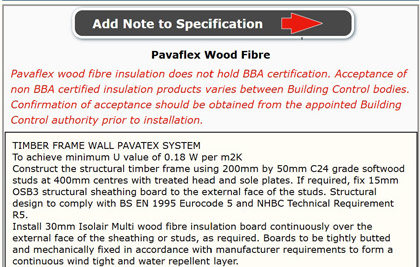
Products chosen should have certification. BBA certification is available for some products where a particular usage/build-up is detailed in the cert. This should provide easier route to acceptance by Building Control. If using non-BBA-certified products, we recommend checking whether they will be accepted by Building Control/Building Inspector.
When using Wood-Fibre products, we recommend checking that products meet requires in relation to Certification. Where a product doesn't have BBA certification, we recommend checking that the products meets requirements in relation to Safety, Fire-Safety, Moisture / Water resistance etc.
Building Regulations Specifications incorporating Wood-Fibre Insulation Products
We currently have a range of Specifications that incorporate Wood-Fibre Insulation products and plan to extend the range with the addition of Wood-Fibre products from alternative manufacturers, as well as a choice of U-Values and more Detail Drawings.
Walls
Timber Frame Wall with Brick Finish (Pavatex) (U-Value 0.18)
Timber Frame Wall with Render Finish (Pavatex) (U-Value 0.18)
Timber Frame Wall with Tile Finish (Pavatex) (U-Value 0.18)
Timber Frame Wall with Timber-Cladding (Pavatex) (U-Value 0.18)
Roofs
Pitched Roof with Insulation Between & Over (recommended) Rafters (Pavatex) (U-Value 0.15)
Pitched Roof with Insulation Between & Below Rafters (Pavatex) (U-Value 0.15)
Floors
Timber Suspended Floor with Pavatex/Pavaflex (U-Value 0.18)
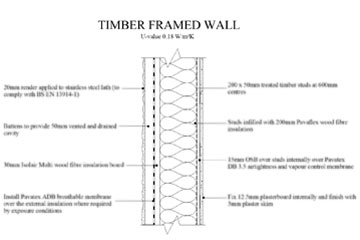
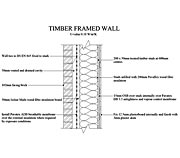
Wood-Fibre Insulation Detail Drawings
Timber Framed Walls
DWG/DXF/JPG
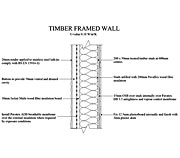
DWG/DXF/JPG
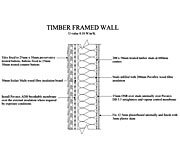
DWG/DXF/JPG
Timber Suspended Floors
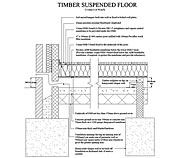
DWG/DXF/JPG
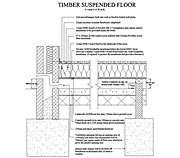
DWG/DXF/JPG
Pitched Roofs
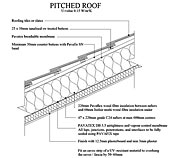
DWG/DXF/JPG
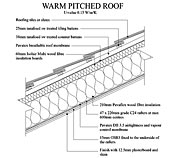
DWG/DXF/JPG
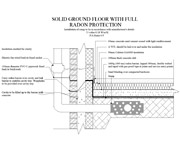
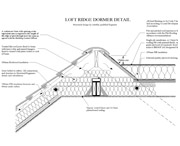
and Detail Drawings
Wales


England



- Offices
- Shops / Commercial
- Industrial Buildings
- Storage / Assembly Buildings
- Other Non-Residential
Wood-Fibre Insulation products
Use of Wood-Fibre Insulation
Wood-Fibre Insulation products are intended to provide a more sustainable, natural and eco-friendly alternative.
Several manufacturers produce Wood-Fibre Insulation products, with properties that differ between manufacturers and individual materials.
Benefits of using of Wood-Fibre Insulation
This may vary between products and manufacturers but compared with 'Standard' Insulation Products, benefits can include:
- Environmentally sustainability. Sustainably-managed sourcing.
- Less/No harmful additives.
Type of Product
Wood-Fibre products are available in various formats including:
- Sarking/Sheathing Boards
- Interlocking boards
- Combined Sheathing-Render boards
- Rigid-Fibre boards
- Flexible Insulation Batts for use between studs/rafters/joists etc.
Thermal Conductivity/Performance
Typical Thermal Conductivity values for Wood-Fibre products might range from 0.048 W/(mK) for Sarking/Sheathing boards to 0.036 / 0.038 W/(mK) for Flexible Insulation Batts.
Wood-Fibre Batts for use between studs/rafters/joists generally have better thermal performance (0.036 - 0.038 W/[mK]) than the corresponding Wood-Fibre Sarking/Sheathing Boards.
Some manufacturers also provide Rigid Wood-Fibre Boards with good thermal performance (0.037) for use in Walls, Roofs and Floors.
In some cases, many standard non-wood-fibre insulation products tend to have better thermal performance, although it is likely that the additional thickness required for Wood-Fibre Insulation products is justified in terms of the environment for the benefits in sustainability.
Value Assessment
Price does vary even for similar Wood-Fibre product-types between manufacturers but might also reflect thermal performance, sensitivity to moisture, whether the product has suitable certification. For example, some products with a higher price may have more relevant certification that means it's more likely to be accepted by Building Control/Building Inspector.
Sensitivity to Dampness/Moisture
Wood-Fibre products are generally sensitive to moisture although Wood-Fibre Sarking / Sheathing boards are available with better protection from moisture.
Due to sensitivity to moisture, many Wood-Fibre products require additional measures for Storage and Installation. (See next section)
Measures required for Storage and Installation
In connection to Sensitivity to Moisture in Wood-Fibre Products, measured will need to be taken for storage prior to use and also during installation.
When installing the product, specific or additional membranes and boards (e.g. OSB, Sarking or Sheathing) may be needed in the Build-Up or recommended to provide additional moisture protection.
Wood-Fibre insulation manufacturers may specify particular membranes, also their own products, for use alongside the insulation for wall / roof/ floor Build-Ups.
Thicknesses available
Flexible Insulation products for use between studs / joists / rafters may be available from 20mm up to 240mm but this varies between manufacturers. These products can usually be layered in walls, roofs and timber-suspended floors but may not be suitable for Solid Floors.
Thicknesses of Sarking/Sheathing boards may be from 30mm up to 200mm although some manufacturers have a more limited range.
Where a very low U-Value is needed, the thickness of insulation required with some products may become an issue, particularly for Solid Floors, but this may vary between manufacturers.
Products can often be layered but for lower U-Values e.g. 0.11, thicknesses need may be above 200mm or even 300mm.
Suitability for Specific Applications
Flexible Wood-Fibre Batts tend to have the better Thermal Performance among Wood-Fibre products and may be suitable for Walls, Roofs and Timber Suspended Floors but not Solid Floors.
Rigid Wood-Fibre Boards produced by some manufacturers, have with better thermal performance (0.037) and may be suitable for use in solid floors, although thicknesses may be limited (in the region of 100mm).
Wood-Fibre Sarking / Sheathing insulation boards, usually installed on the outside of studs/rafters, can provide some protection against moisture, as well as providing some insulation across the studs/rafters to reduce thermal bridging.
Certification
Products chosen should have certification. BBA certification is available for some products where a particular usage/build-up is detailed in the cert. This should provide easier route to acceptance by Building Control. If using non-BBA-certified products, we recommend checking whether they will be accepted by Building Control/Building Inspector.
When using Wood-Fibre products, we recommend checking that products meet requires in relation to Certification. Where a product doesn't have BBA certification, we recommend checking that the products meets requirements in relation to Safety, Fire-Safety, Moisture / Water resistance etc.
Building Regulations Specifications incorporating Wood-Fibre Insulation Products
We currently have a range of Specifications that incorporate Wood-Fibre Insulation products and plan to extend the range with the addition of Wood-Fibre products from alternative manufacturers, as well as a choice of U-Values and more Detail Drawings.
Walls
Timber Frame Wall with Brick Finish (Pavatex) (U-Value 0.18)
Timber Frame Wall with Render Finish (Pavatex) (U-Value 0.18)
Timber Frame Wall with Tile Finish (Pavatex) (U-Value 0.18)
Timber Frame Wall with Timber-Cladding (Pavatex) (U-Value 0.18)
Roofs
Pitched Roof with Insulation Between & Over (recommended) Rafters (Pavatex) (U-Value 0.15)
Pitched Roof with Insulation Between & Below Rafters (Pavatex) (U-Value 0.15)
Floors
Timber Suspended Floor with Pavatex/Pavaflex (U-Value 0.18)
Timber Suspended Floor with Pavatex/Pavaflex (U-Value 0.15 [Wales])
Wood-Fibre Insulation Detail Drawings
Timber Framed Walls
Add To Basket
Includes DWG,
DXF and Jpeg
Add To Basket
Includes DWG,
DXF and Jpeg
Add To Basket
Includes DWG,
DXF and Jpeg
Timber Suspended Floors
Add To Basket
Includes DWG,
DXF and Jpeg
Add To Basket
Includes DWG,
DXF and Jpeg
Pitched Roofs
Add To Basket
Includes DWG,
DXF and Jpeg
Add To Basket
Includes DWG,
DXF and Jpeg